
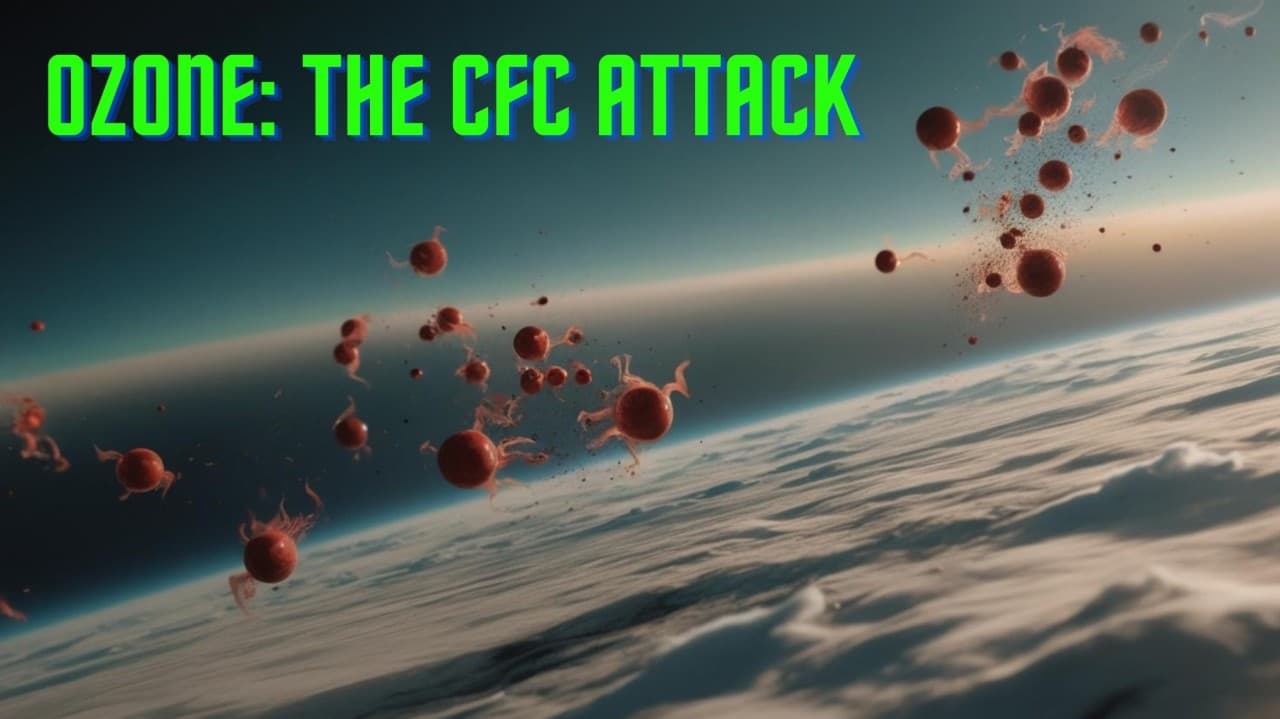
The story of refrigerants and their effect on our ozone layer is a remarkable example of environmental crisis turning into global collaboration and success.
Historical Impact: The Rise and Fall of CFCs
In the 1970s and 80s, chlorofluorocarbons (CFCs), commonly known by the trade name Freon, were widely used in refrigeration, air conditioning, and aerosol sprays. Praised initially for being non-toxic and stable, they were later revealed to be major culprits in ozone layer destruction. Groundbreaking research by scientists Rowland and Molina in the mid-1970s sounded early warnings, but the discovery of the Antarctic ozone hole in 1985 by Joseph Farman's team starkly illustrated the environmental crisis at hand. This hole provided undeniable evidence that our planet's protective ozone layer was being severely damaged.
Global Response: The Success of the Montreal Protocol
In response to this crisis, the international community took swift and decisive action. The Montreal Protocol, established in 1987, became one of the most successful global environmental agreements. It phased out CFCs and significantly reduced hydrochlorofluorocarbons (HCFCs), which were transitional refrigerants. This global effort dramatically reduced ozone-depleting emissions, marking a historic environmental victory.
Today's Refrigerants and Their Ozone Impact
Today, hydrofluorocarbons (HFCs) have largely replaced harmful refrigerants. HFCs, while ozone-safe, presented another challenge due to their high global warming potential (GWP). To tackle this, the Kigali Amendment was introduced in 2016, setting out plans for a global phase-down of HFCs.
Looking Ahead: Sustainable Alternatives and Full Ozone Recovery
The refrigeration industry is now rapidly adopting even safer alternatives, including hydrofluoroolefins (HFOs) and natural refrigerants like ammonia, carbon dioxide, and hydrocarbons. These substances offer zero ozone depletion potential and significantly lower GWPs. Thanks to continued international cooperation and innovation, scientists predict the ozone layer will return to its pre-1980s health by approximately 2066.
A Success Story Worth Celebrating and Replicating
The journey of refrigerants and ozone layer recovery demonstrates that collective global action, backed by solid science and innovation, can effectively tackle and even reverse environmental damage. It's a powerful lesson and inspiration as we continue addressing current and future environmental challenges.
Let's keep moving forward, together.