
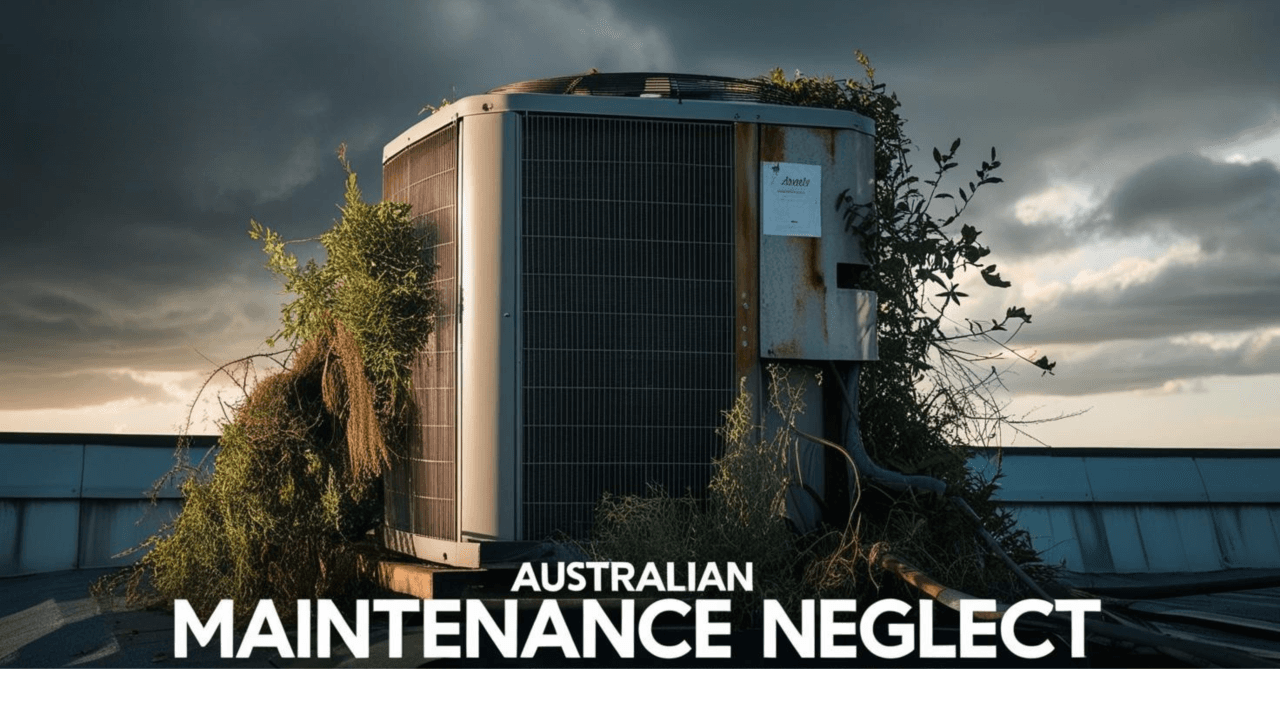
In Australia's commercial sector, Heating, Ventilation, Air Conditioning, and Refrigeration (HVAC&R) systems are critical to operational efficiency, occupant comfort, and public safety. Despite their importance, recent industry analysis reveals a concerning trend: widespread neglect of routine maintenance, leading to avoidable equipment failures, increased operational costs, and significant safety and compliance risks.
Reactive Maintenance Dominates
Research indicates a heavy reliance on reactive (breakdown) maintenance across Australian commercial buildings. Approximately 66% of commercial HVAC maintenance is reactive, with only 18% being preventative and 16% predictive. This is especially true for refrigeration systems in retail and hospitality sectors, where up to 80% of maintenance is performed only after equipment failures.
Commonly Neglected Tasks and Consequences
Neglect commonly manifests in overlooked basic maintenance tasks such as cleaning filters, checking refrigerant levels, and calibrating sensors. Studies involving over 14,000 commercial buildings in Australia highlighted the five most frequent HVAC faults:
- Control faults and sensor miscalibration
- Airflow obstructions due to dirty filters or ducts
- Refrigerant leaks or incorrect refrigerant charges
- General hygiene neglect of coils and condensers
- Water flow and drainage issues
These issues not only shorten equipment life but also significantly increase energy consumption. Sustainability Victoria notes that poorly maintained HVAC systems can consume up to 30% more energy than well-maintained counterparts.
Real-Life Consequences
The consequences of HVAC&R neglect are more severe than many realise:
- Legionnaires' Disease Outbreaks: Poorly maintained cooling towers were responsible for significant Legionnaires' outbreaks, such as the Melbourne Aquarium incident in 2000 (125 cases, 4 fatalities) and more recently in suburban Melbourne in 2024 (78 cases, 2 fatalities).
- Fire and Explosion Risks: South Australian fire authorities reported over $2.5 million in damage from HVAC-related fires in one year alone, primarily due to neglected maintenance tasks. A refrigeration compressor explosion at Adelaide’s Parabanks Shopping Centre in 2019 severely injured technicians and highlighted the dangers of improper maintenance.
- Business Interruptions and Financial Losses: Routine breakdowns in refrigeration equipment within retail and hospitality sectors frequently result in substantial product spoilage and loss of business revenue, underscoring that short-term savings on maintenance often lead to significant long-term costs.
Regulatory Compliance and Legal Implications
Australia maintains stringent regulatory frameworks for HVAC&R maintenance, encompassing environmental protection, workplace health and safety, and public health (e.g., Legionella control). Non-compliance not only leads to operational disruptions but also exposes businesses to significant legal and financial liabilities. For example, venting refrigerants illegally can incur fines up to $333,000 for corporations.
Embracing Best Practices
Industry leaders advocate transitioning towards preventative and predictive maintenance strategies. These proactive approaches reduce energy usage, extend equipment life, and improve reliability. Digital technologies, such as building management systems and advanced fault diagnostics, further enhance maintenance effectiveness by identifying issues before they escalate.
AIRAH ’s DA19 HVAC&R Maintenance guidelines provide comprehensive standards designed to assist commercial facility managers and building owners in achieving optimal system performance, regulatory compliance, and significant cost savings.
The Way Forward
Neglecting HVAC&R maintenance in the commercial sector is no longer sustainable or economically viable. Australian businesses must prioritise regular, comprehensive maintenance as part of their operational strategy to safeguard occupant health, ensure regulatory compliance, and enhance energy efficiency.
Ultimately, proactive HVAC&R maintenance represents not just a cost-effective decision, but a strategic investment in the long-term success and safety of Australian businesses and communities.