
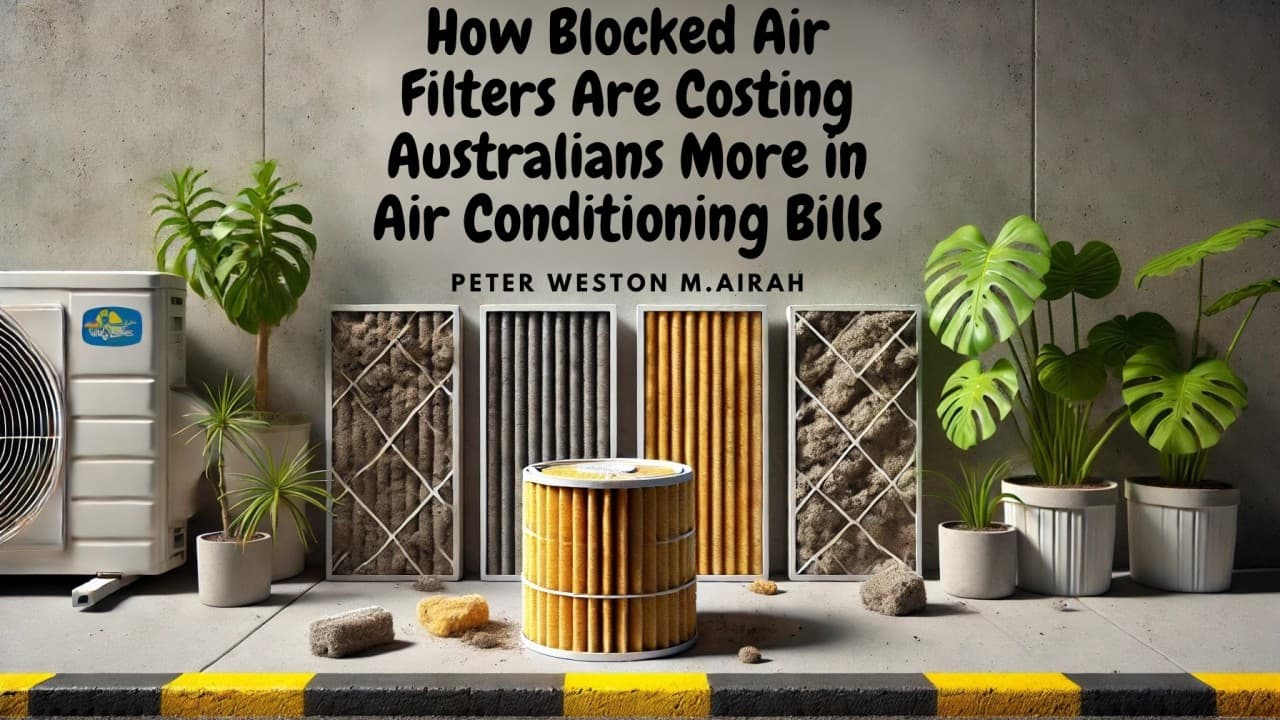
Air conditioning is essential in Australia’s diverse climate, from the humid tropics to the scorching outback and the urban heat of our major cities. But what if I told you that something as simple as a clogged air filter could be driving up your energy bills and reducing your comfort—without you even realising it?
Blocked air filters are one of the most overlooked maintenance issues in both residential and commercial air conditioning systems. Yet, they have a measurable impact on cooling capacity, energy efficiency, and system longevity. Here’s what you need to know about how a dirty filter could be costing you hundreds of dollars a year—and how to fix it.
🔧 The Science Behind Airflow and Efficiency
Your air conditioner works by drawing warm air from your home or building through a return-air filter, passing it over an evaporator coil to extract heat, and then circulating the cooled air back into the space. This process depends on consistent airflow—and that’s exactly what a dirty filter restricts.
A clean filter has a low resistance, typically allowing 100% of the designed airflow (for example, 500 litres per second (L/s) in a ducted home system). As dust builds up, the pressure drop across the filter increases. This means the fan has to work harder, and in many cases, less air reaches the coil.
With a moderately clogged filter, airflow may drop to 80% of the design rate. If the filter is heavily blocked, airflow can be reduced to 50–60%, severely limiting the system’s cooling ability.
🚨 The result? A significant reduction in cooling performance. A system that should deliver 7 kW of cooling might only provide 6 kW or even 5.5 kW, leaving your home or office struggling to cool down on hot days.
⚡ The Hidden Cost: Higher Energy Consumption
If your air conditioner isn’t cooling efficiently, it runs longer to reach the desired temperature, consuming more electricity in the process.
For example:
- A residential split system running in peak summer might normally consume 20 kWh per day. With a dirty filter, energy consumption could rise to 22–23 kWh—an increase of 10–15%.
- In a commercial building, a large rooftop AC unit might draw 20 kW of power in normal operation. With a blocked filter, the fan and compressor work harder, pushing consumption to 25 kW or more—a 25% increase in energy use.
Over time, this wasted energy adds up. For an Australian household running a ducted AC 800 hours per year, a 15% efficiency loss could mean an extra 300–400 kWh of electricity annually—costing $100–150 per year at standard electricity rates. In commercial settings, this extra energy use can translate to thousands of dollars in higher power bills.
🌏 How This Affects Air Conditioning Across Australia
The impact of blocked filters varies depending on climate and air conditioning usage. Here’s how different Australian regions experience efficiency losses:
- 🌴 Northern Australia (Darwin, Cairns, Townsville): Constant AC use means dirty filters accumulate quickly, restricting airflow. The combination of high temperatures and humidity makes airflow reduction particularly noticeable—leading to longer run times and higher bills.
- ☀️ Hot & Dry Regions (Alice Springs, Broken Hill): Dust accumulation is a major issue, and filters clog faster in these environments. A blocked filter can result in 30% less airflow, leaving homes and businesses struggling to cool down in extreme heat.
- 🏙️ Urban & Coastal Areas (Sydney, Brisbane, Perth, Adelaide): Homes and offices rely on AC during peak summer months. When a heatwave hits, a dirty filter can significantly limit cooling output, making rooms feel uncomfortably warm despite the system working overtime.
- ❄️ Cooler Climates (Melbourne, Hobart, Canberra): Filters may be neglected in winter, but dust builds up over time. When summer arrives, a clogged filter can prevent the AC from effectively cooling the space—leading to frustration and unnecessary power consumption.
Regardless of where you live, keeping your filter clean ensures your air conditioner delivers the cooling you’re paying for.
🛠️ The Simple Fix: Regular Filter Maintenance
The good news? Fixing this issue is easy.
✅ For homes:
- If you have a split-system air conditioner, check and clean the filter every 1–2 months. Simply remove it, wash it with warm water, let it dry, and place it back.
- For ducted systems, clean or replace the return-air grille filter every 3 months during heavy use.
✅ For businesses & commercial buildings:
- Establish a regular filter maintenance schedule—monthly or quarterly, depending on system size and environment.
- Use differential pressure sensors in large HVAC systems to monitor filter clogging and ensure timely replacements.
- Keep an eye on airflow reductions in office spaces—if rooms feel stuffy or warm, a dirty filter could be the culprit.
By maintaining clean filters, you can: ✔️ Restore full cooling capacity (so your system actually delivers 7 kW instead of 6 kW!) ✔️ Reduce energy use by 10–15%—leading to lower electricity bills ✔️ Prevent strain on your AC unit, avoiding costly repairs and extending equipment life
✅ Take Action Today
A clogged air filter might not seem like a big issue, but it’s quietly costing Australians millions in wasted energy every year.
If you want to keep your home or office cooler for less money, check your AC filter today. This one simple habit can save you hundreds of dollars per year—and keep your air conditioner running smoothly for years to come.
Have you checked your air filter lately? Let me know in the comments below! 👇