
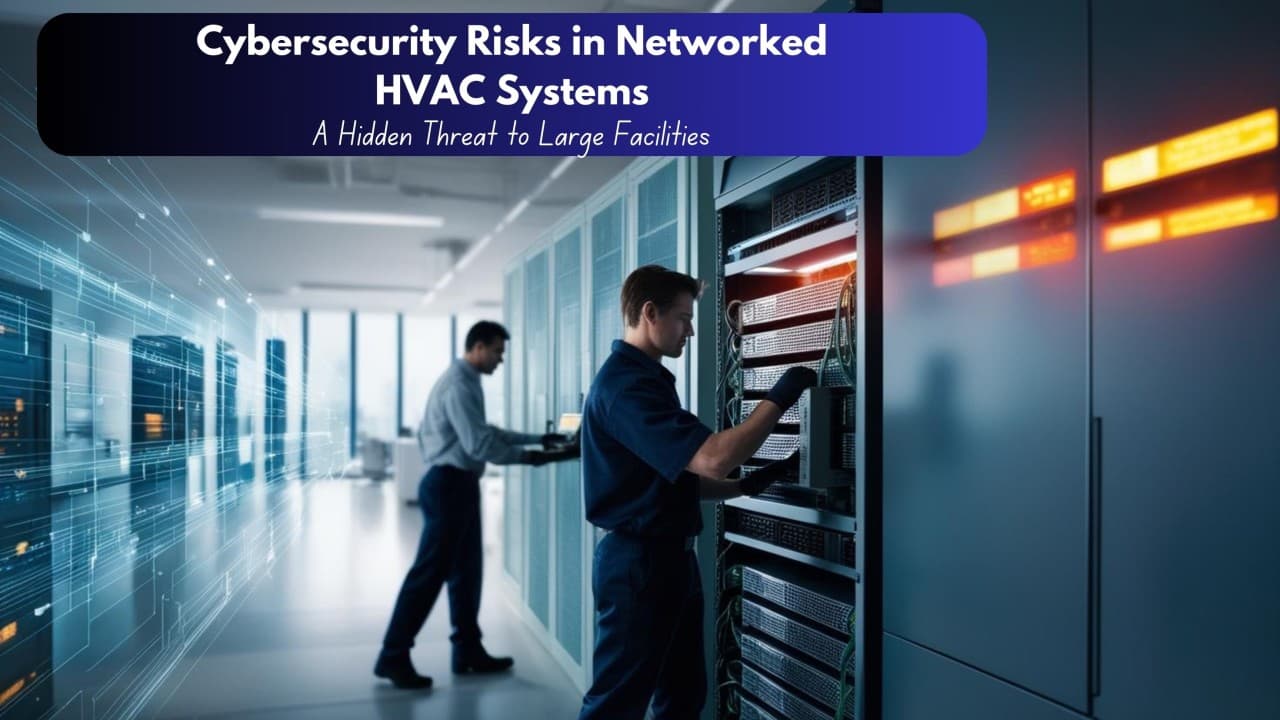
In today's increasingly connected world, smart Heating, Ventilation, and Air Conditioning (HVAC) systems have become essential components in large facilities, including hospitals, data centers, office buildings, and manufacturing plants. While these networked systems provide significant efficiency and comfort, they also pose critical cybersecurity vulnerabilities that organizations often overlook. Recent high-profile cyber incidents demonstrate the potential dangers of ignoring these risks.
Real-world Incidents
- Target Data Breach (2013): Cyber attackers gained entry through credentials stolen from an HVAC contractor, ultimately compromising 40 million credit card numbers. Poor network segmentation allowed attackers to move from HVAC system access points into sensitive financial systems.
- Hospital HVAC Vendor Breach (2021): An attacker compromised ENE Systems, an HVAC provider to hospitals, threatening to manipulate critical environmental controls to extort payment.
- Office Building Lockout (Germany, 2021): Hackers exploited vulnerabilities in a building automation system, locking controllers and disabling HVAC and lighting, causing prolonged disruption.
- Finland Apartment Heating DDoS (2016): Residents lost heating during winter due to a Distributed Denial-of-Service (DDoS) attack targeting their HVAC control systems.
Common Vulnerabilities
Networked HVAC systems commonly exhibit vulnerabilities such as:
- Outdated firmware and software: Older HVAC systems often lack regular security patches.
- Weak or default passwords: Many HVAC devices operate with factory-default or easily guessable credentials.
- Insecure network protocols: Protocols like BACnet and Modbus often lack built-in security, allowing easy interception and manipulation.
- Poor network segmentation: HVAC systems frequently share network space with more critical systems, facilitating lateral attacks.
- Unsecured vendor access: Third-party contractors with inadequate security can become easy targets for initial system penetration.
Tactics Used by Cyber Threat Actors
Cyber attackers typically exploit HVAC vulnerabilities through:
- Phishing and credential theft from third-party HVAC service providers.
- Scanning the internet for exposed HVAC systems using tools like Shodan.
- Deploying malware tailored to exploit known vulnerabilities in HVAC protocols and controllers.
- Leveraging initial HVAC access points to pivot deeper into corporate networks, escalating attacks from mere inconvenience to catastrophic breaches.
- Direct sabotage or extortion, such as manipulating HVAC controls to disrupt operations and demand ransoms.
Recommended Mitigation Strategies
To protect against these risks, organizations should:
- Segment and isolate HVAC networks from other critical corporate networks.
- Implement secure remote access practices, including multi-factor authentication (MFA) and Virtual Private Networks (VPN).
- Enforce strong credential policies by regularly changing passwords and disabling default credentials.
- Regularly patch and update firmware and software to address vulnerabilities.
- Monitor and log HVAC network activity to quickly detect unauthorized or suspicious behaviors.
- Establish comprehensive incident response plans, preparing for potential HVAC cybersecurity events.
- Educate staff and vendors about cybersecurity best practices, integrating facilities and IT departments to foster collaboration.
Implications Across Different Facilities
- Hospitals: Cyber-attacks pose direct threats to patient safety by compromising environments critical to infection control and medical procedures.
- Data Centers: HVAC disruptions can lead to significant operational outages and hardware damage.
- Office Buildings: Cyber incidents can severely disrupt productivity and serve as entry points for more damaging breaches.
- Manufacturing Plants: Attacks may halt production processes, cause significant economic damage, and even create safety hazards due to environmental disruptions.
Conclusion
Cyber threats targeting networked HVAC systems represent an overlooked yet increasingly critical risk to large facilities. Organizations must recognize HVAC cybersecurity as integral to their overall risk management strategy, proactively securing these systems to protect against potentially devastating attacks. By adopting robust security practices and fostering cross-departmental collaboration, facilities can mitigate these hidden threats and ensure operational continuity and safety.